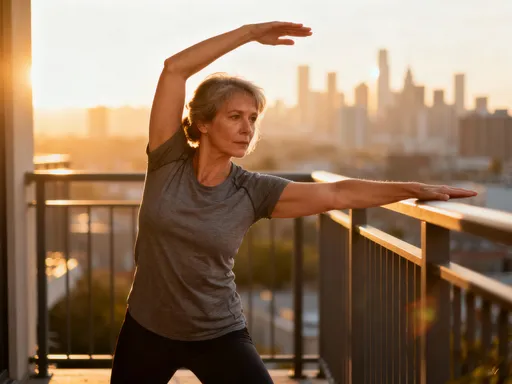
Youth in Motion: How 10 Minutes a Day Kept Me Feeling Decades Younger
Aging doesn’t have to mean slowing down. I used to feel stiff, tired, and stuck—until I discovered simple movement tricks that made a real difference. No extreme workouts or miracle claims, just practical, science-backed motion strategies that fight age-related decline. This is what actually works when you want to stay strong, flexible, and energized—naturally. Let me show you how small shifts in daily movement can lead to big long-term wins. It’s not about pushing harder or training longer; it’s about moving smarter, more often, and with purpose. The good news? You don’t need hours, equipment, or a gym membership. Just ten focused minutes a day can begin reversing the subtle signs of aging that many assume are inevitable.
The Hidden Truth About Aging and Movement
Many people accept stiffness, fatigue, and weakness as unavoidable consequences of getting older. But modern science tells a different story: it’s not age itself that causes physical decline—it’s inactivity. The human body is built for motion, and when movement becomes rare, the systems that keep us vibrant begin to deteriorate. Research from the National Institute on Aging shows that muscle mass can start to decline as early as age 30, with a loss of 3% to 5% per decade thereafter if no action is taken. This process, known as sarcopenia, affects balance, strength, and metabolism, increasing the risk of falls and chronic disease.
Equally concerning is the loss of joint mobility. Without regular movement, connective tissues stiffen, cartilage receives less nourishment, and posture begins to shift. The shoulders round forward, the spine loses its natural curve, and everyday actions—like bending to tie shoes or reaching for a shelf—become more difficult. These changes are often mistaken as signs of aging, but they are more accurately symptoms of a sedentary lifestyle. A study published in the Journal of Applied Physiology found that sedentary adults in their 50s had arterial stiffness comparable to individuals 20 years older, highlighting how inactivity accelerates biological aging.
The body operates on a “use it or lose it” principle. When muscles, joints, and cardiovascular systems are underused, they downregulate function. This isn’t a flaw—it’s an evolutionary adaptation to conserve energy. But in modern life, where sitting dominates, this efficiency becomes a liability. The good news is that this process is largely reversible. Movement signals the body to maintain and even rebuild tissue. By simply increasing daily motion, you send a biological message: “I am active, so I need strength, flexibility, and stamina.” This shift in behavior can slow, and in some cases reverse, the physical markers of aging.
Why Quick Movement Wins Over Long Workouts
For decades, fitness culture has emphasized long, intense workouts as the gold standard for health. But emerging research suggests that for most adults—especially those over 40—shorter, more frequent movement sessions may be more effective for long-term vitality. The key isn’t duration; it’s consistency. A 2022 study in the British Journal of Sports Medicine found that adults who engaged in brief, daily physical activity—just 10 to 15 minutes—experienced greater improvements in energy levels, cardiovascular health, and mood than those who exercised for longer periods but less frequently.
One reason is how movement affects circulation. Short bursts of activity stimulate blood flow, delivering oxygen and nutrients to muscles and organs while removing metabolic waste. This is especially important as we age, when circulation naturally slows. Improved blood flow also supports brain health, reducing the risk of cognitive decline. Additionally, brief movement sessions enhance mitochondrial function—the energy-producing units in cells. Mitochondria respond best to regular stimulation, not occasional overloads. Daily movement keeps these cellular engines efficient, helping to maintain energy and delay fatigue.
Hormonal balance is another benefit of frequent, low-dose activity. Cortisol, the stress hormone, tends to rise with age and inactivity, contributing to weight gain, poor sleep, and inflammation. Regular movement helps regulate cortisol while boosting endorphins and growth hormone—both of which support tissue repair and mood. The beauty of short routines is sustainability. Unlike hour-long gym sessions that can feel daunting, a 10-minute practice is easier to stick with, even on busy days. Over time, this consistency leads to cumulative benefits that surpass the results of sporadic, intense workouts.
The 3 Foundational Movement Types That Fight Aging
Not all movement is created equal when it comes to slowing aging. To get the full anti-aging benefit, three types of movement must be included: mobility drills, resistance training, and low-impact cardio. Each plays a distinct and essential role in maintaining physical function and vitality. Mobility work keeps joints lubricated and flexible, reducing stiffness and improving range of motion. Resistance training preserves muscle mass and bone density, which naturally decline with age. Low-impact cardio supports heart health, lung capacity, and brain function by improving circulation and oxygen delivery.
Mobility drills—such as dynamic stretching, joint circles, and controlled movement patterns—help maintain the health of synovial fluid, the natural lubricant in joints. Without regular motion, this fluid becomes stagnant, leading to creakiness and discomfort. A 2020 study in the Journal of Aging and Physical Activity found that adults who performed daily mobility exercises reported significantly less joint pain and greater ease in daily tasks. These movements don’t need to be intense; gentle, rhythmic motions like neck rolls, shoulder rolls, and ankle circles can make a noticeable difference over time.
Resistance training is perhaps the most powerful anti-aging tool available. It doesn’t require weights or machines—bodyweight exercises like squats, wall push-ups, and step-ups are highly effective. The goal is to challenge muscles enough to stimulate growth and maintenance. Muscle isn’t just about strength; it’s a metabolic organ that helps regulate blood sugar and burns calories even at rest. Preserving muscle mass helps prevent age-related weight gain and reduces the risk of type 2 diabetes. Even two to three short resistance sessions per week can slow muscle loss and improve functional independence.
Low-impact cardio—such as brisk walking, marching in place, or gentle dancing—supports cardiovascular health without stressing the joints. Unlike high-intensity interval training, which may not be suitable for everyone, low-impact cardio is accessible and sustainable. It strengthens the heart, improves lung efficiency, and increases cerebral blood flow, which is linked to better memory and mental clarity. Combining all three movement types ensures a comprehensive approach to aging well—one that addresses the body as an interconnected system.
Your 10-Minute Daily Anti-Aging Routine (Step-by-Step)
Here’s a simple, science-backed 10-minute routine that combines all three foundational movement types. It requires no equipment, fits into small spaces, and can be done at any time of day. Perform each exercise for 45 seconds, followed by 15 seconds of rest. Complete the circuit once, or repeat if time allows.
Start with neck and shoulder mobility: gently roll your shoulders forward and backward, then perform slow neck circles—ear to shoulder, not full rotation. This warms up the upper body and relieves tension from sitting. Next, move to ankle and wrist circles: lift one foot and draw circles with your toes, then switch. Repeat with wrists. This stimulates joint fluid and improves circulation in often-neglected areas.
Transition to bodyweight squats: stand with feet hip-width apart, lower slowly as if sitting in a chair, then rise. Keep your chest up and knees aligned with toes. This builds leg strength and supports hip and knee health. If full squats are difficult, perform partial squats or use a chair for support. Follow with wall push-ups: stand at arm’s length from a wall, lean in, and push back. This strengthens the chest, shoulders, and arms with minimal joint strain.
Next, do standing marches: lift knees alternately, engaging the core. This boosts heart rate gently and improves coordination. Add arm swings to increase intensity. Then, perform heel-to-toe walks: walk in a straight line, placing one foot directly in front of the other. This enhances balance and engages stabilizing muscles. Finish with deep breathing and gentle side bends: inhale as you reach one arm overhead, exhale as you bend to the side. This integrates movement with breath, calming the nervous system.
Repeat the circuit if desired, or simply rest. The goal is consistency, not perfection. Over time, this routine improves strength, flexibility, and energy. It can be done in the morning, during a break, or before bed—anytime you need a reset. Modifications make it accessible: sit on a chair for squats, reduce range of motion, or slow the pace. The key is to move with awareness and intention.
How Movement Rewires Your Body at the Cellular Level
Beyond the visible benefits—better posture, more energy, improved strength—movement triggers profound changes at the cellular level. These internal shifts are what truly slow the aging process. One of the most significant is the effect on telomeres, the protective caps at the ends of chromosomes. Telomeres shorten with age, and when they become too short, cells can no longer divide, leading to tissue degeneration. A landmark study published in the journal Circulation found that adults who engaged in regular physical activity had longer telomeres than their sedentary peers—equivalent to being biologically up to nine years younger.
Movement also reduces chronic inflammation, a key driver of aging and age-related diseases. Inflammatory markers like C-reactive protein (CRP) are consistently lower in active individuals. Exercise stimulates the release of anti-inflammatory cytokines while suppressing pro-inflammatory ones. This creates a more balanced internal environment, reducing the risk of conditions like arthritis, heart disease, and cognitive decline. Even moderate activity, such as daily walking, has been shown to lower inflammation over time.
Another cellular benefit is autophagy, the body’s natural “cleanup” process. During autophagy, damaged cells and proteins are broken down and recycled. This process is essential for maintaining cellular health and preventing dysfunction. Research in the journal Nature shows that physical activity enhances autophagy, particularly in muscle and brain tissue. This means movement helps the body renew itself from within, clearing out old material and making room for new, healthy cells.
Mitochondrial biogenesis—the creation of new mitochondria—is also stimulated by regular movement. As we age, mitochondrial efficiency declines, leading to fatigue and slower recovery. Exercise signals the body to produce more and better mitochondria, improving energy production and resilience. These changes don’t happen overnight, but with consistent daily movement, the cumulative effect is a body that functions more like a younger version of itself.
Building a Lifestyle That Moves—Without Trying Too Hard
Sustained health doesn’t come from occasional intense effort—it comes from daily habits. The goal isn’t to “work out” but to live in a way that naturally includes more movement. This shift in mindset makes anti-aging practices effortless over time. Start by identifying opportunities to move throughout the day: take the stairs instead of the elevator, park farther from the entrance, or stand while talking on the phone. These small choices add up.
Environmental design plays a powerful role. Keep resistance bands or light dumbbells near your favorite chair so they’re easy to grab during TV commercials. Place a small mat in your bedroom or living room as a visual cue for morning stretches. Set phone reminders to stand and move every hour, especially if you work at a desk. These cues reduce the need for willpower by making movement the default choice.
Walking is one of the simplest and most effective habits to build. Aim to increase your daily steps gradually. A 2023 study in JAMA Internal Medicine found that women who averaged 4,400 steps per day had significantly lower mortality rates than those who took fewer, with benefits plateauing around 7,500 steps. You don’t need a fitness tracker, but having one can provide gentle motivation. Walk after meals, take a short stroll after dinner, or enjoy a walking chat with a friend. The rhythm of walking is not only good for the body but also calming for the mind.
Finally, link movement to existing habits—a technique known as habit stacking. Stretch while your coffee brews, do heel raises while brushing your teeth, or practice balance by standing on one foot while drying your hair. These micro-movements integrate seamlessly into your routine, requiring no extra time. Over weeks and months, these small actions create a lifestyle that supports long-term vitality without feeling like a chore.
Real Results, Real People: What to Expect and When
Change doesn’t happen overnight, but the timeline for improvement is often shorter than people expect. Many individuals report better sleep within the first one to two weeks of starting a daily movement practice. This is because physical activity helps regulate the circadian rhythm and reduces stress hormones that interfere with rest. By the third or fourth week, energy levels typically rise. Movement improves oxygen delivery and mitochondrial efficiency, leading to less daytime fatigue and greater stamina.
Between six and eight weeks, noticeable gains in strength and posture emerge. Muscles become more responsive, balance improves, and everyday tasks feel easier. One woman in her early 50s shared that after two months of consistent 10-minute routines, she could pick up her granddaughter without back pain for the first time in years. A man in his 60s reported that his morning stiffness disappeared, and he could tie his shoes without sitting down.
After three to six months, the changes become more profound. Joint mobility increases, body composition shifts (with less belly fat and more lean mass), and confidence grows. These aren’t isolated cases—they reflect what research consistently shows: that regular, moderate movement leads to meaningful improvements in quality of life. The key is consistency, not intensity. There are no shortcuts, but the rewards are real and lasting.
It’s also important to recognize non-physical benefits. Many people report improved mood, sharper focus, and a greater sense of control over their health. Movement becomes not just a routine but a form of self-care—a daily promise to show up for yourself. These emotional and mental shifts are just as valuable as the physical ones, contributing to a more vibrant, engaged life.
Move Now, Age Gracefully Later
Aging is inevitable, but decline is not. Movement is the most accessible, natural, and effective anti-aging strategy available to us. It costs nothing, requires no special skills, and can be adapted to any ability level. By investing just ten minutes a day, you send a powerful message to your body: you are still active, still capable, still vital. This small daily act builds resilience, preserves function, and enhances quality of life.
The benefits compound over time. Each minute of movement contributes to stronger muscles, healthier joints, a sharper mind, and a more balanced metabolism. You’re not just adding years to your life—you’re adding life to your years. Start where you are. Use what you have. Do what you can. Whether you begin with seated stretches or a short walk, the most important step is the first one. Make movement a non-negotiable part of your day, and watch how your body responds—not with dramatic transformations, but with steady, sustainable renewal. Move often. Move with purpose. Age not just slowly, but powerfully.