When Disaster Strikes, This Is How Your Money Stays Safe
Natural disasters can hit without warning, turning lives upside down in hours. When floods, earthquakes, or hurricanes strike, financial stability often crumbles faster than buildings. I’ve seen communities lose everything—not just homes, but savings, jobs, and access to banks. That’s why preparing your finances isn’t just smart—it’s survival. In this article, I’ll walk you through how to protect your money before disaster hits, keep it stable during chaos, and rebuild with confidence afterward—all without risky bets or false promises. This is not about getting rich quickly. It’s about ensuring that when the world shakes, your financial footing does not.
The Hidden Financial Earthquake: Why Natural Disasters Break More Than Buildings
Natural disasters do more than damage roads and homes—they trigger silent financial collapses that can last for years. When a hurricane floods a coastal town or wildfires consume a neighborhood, the immediate focus is on safety and shelter. But soon after, families face a second crisis: how to pay for food, medicine, or temporary housing when their bank accounts are frozen, their documents destroyed, and their jobs paused. The financial shock of a disaster is often more devastating than the physical damage because it strikes when people are already vulnerable.
Traditional savings, while important, often fail in emergencies due to lack of access. Imagine a mother in a rural community whose bank branch has collapsed, ATMs are offline, and her identification was lost in the flood. Even if she has money saved, she cannot withdraw it. Her digital records may be inaccessible without internet, and paper documents—like birth certificates or property deeds—may be soaked beyond recognition. In such moments, financial security becomes meaningless if it cannot be accessed when needed most.
Real-world events have shown this pattern repeatedly. After Hurricane Maria in Puerto Rico, many families were cut off from banking services for weeks. Some relied on cash brought in by relief workers or stored in home safes. Others who depended solely on digital accounts found themselves stranded without funds. Similarly, during the 2011 Tōhoku earthquake and tsunami in Japan, entire banking systems were disrupted, and people had to queue for hours to withdraw small amounts of cash. These are not isolated cases—they are warnings. Financial resilience must include not just how much you save, but how well you can use it when systems fail.
The key lesson is that disaster preparedness extends far beyond emergency kits and evacuation plans. It must include a financial plan that anticipates disruption. This means recognizing that income can stop, assets can lose value overnight, and access to money can vanish even if the funds are technically still there. By understanding this hidden financial earthquake, individuals can take proactive steps to shield themselves before disaster strikes. The goal is not to eliminate risk—no one can predict nature—but to reduce vulnerability through smart, practical planning.
Stability Over Speed: Building a Disaster-Resilient Financial Foundation
In times of crisis, the priority is not growth—it is preservation. While long-term investing focuses on returns, disaster readiness demands a different mindset: capital preservation. This means protecting what you have rather than chasing what you might gain. A disaster-resilient financial foundation is not built on high-risk stocks or speculative ventures, but on stability, accessibility, and redundancy. At its core is what some call a “financial safety core”—a collection of assets designed to remain secure and usable even when normal systems break down.
This safety core typically includes insured deposit accounts, such as those covered by government-backed insurance programs. These accounts offer protection up to certain limits and are less likely to lose value during economic stress. They are not meant to generate wealth, but to serve as anchors—reliable places where money remains intact when markets wobble or banks close. Short-duration financial instruments, like money market funds or short-term certificates of deposit, may also play a role. These tend to be less volatile and can be converted to cash more quickly than long-term investments.
Equally important is diversifying access. Relying on a single bank, a single app, or a single physical location creates a single point of failure. If that system goes down, so does your access to funds. A resilient approach spreads holdings across multiple institutions and formats. For example, keeping a portion of emergency savings in a local credit union, another in a national bank with online access, and a small amount in physical cash reduces dependence on any one source. This geographic and institutional diversification strengthens the foundation.
Another aspect of stability is minimizing complexity. In a crisis, complicated investment products or unfamiliar digital platforms can become obstacles. The safest structures are often the simplest: insured accounts, clear documentation, and straightforward withdrawal processes. The goal is not to maximize returns during calm times, but to ensure that money remains intact and reachable when everything else feels uncertain. This shift—from growth to guardrails—is the first step toward true financial resilience.
The Liquidity Lifeline: Why Access Trumps Returns in Crisis
When disaster strikes, liquidity becomes more valuable than yield. A high-interest savings account is useless if it cannot be accessed during a power outage or network failure. Liquidity—the ability to turn assets into usable cash quickly—is the lifeline that keeps families afloat in the first days and weeks after a crisis. Without it, even those with substantial savings may struggle to buy food, fuel, or medicine. The difference between hardship and survival often comes down to whether money can be used when and where it is needed.
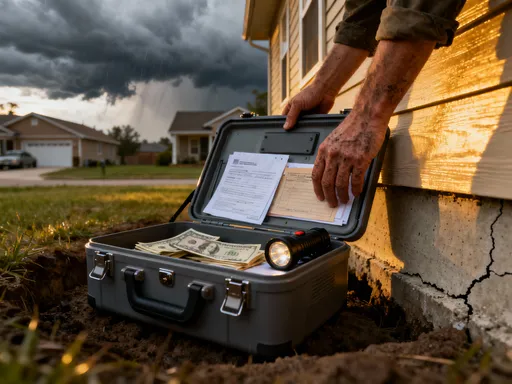
Emergency funds should be structured with this reality in mind. A portion of savings should be kept in cash, stored securely at home in a fireproof and waterproof container. This is not about hoarding large sums, but about having enough to cover three to seven days of essential expenses. The exact amount depends on family size and local conditions, but the principle remains: physical cash works when digital systems do not. It requires no password, no signal, and no verification—just access.
Digital backups are also essential, but they must be designed for offline use. Storing login credentials, account numbers, and emergency contacts in a secure, non-digital format—such as a printed document in a protected folder—ensures that information is not lost if devices fail. Some families use encrypted USB drives kept in safe locations, though care must be taken to protect against theft or damage. The idea is redundancy: if one method fails, another can take its place.
Prepaid cards and digital wallets linked to stable networks can also support liquidity. Unlike traditional bank accounts, some prepaid options do not require credit checks and can be reloaded remotely. In areas with spotty banking infrastructure, these tools have helped people receive aid and make small purchases when cash is scarce. However, they are not foolproof—service outages or provider failures can still disrupt access. Therefore, they should complement, not replace, physical cash and insured accounts.
The lesson is clear: returns matter little when access is blocked. A 2% return on a locked account is worth less than $100 in hand during a blackout. Building a liquidity lifeline means prioritizing availability over optimization. It means accepting slightly lower interest in exchange for peace of mind. And it means preparing not for the best-case scenario, but for the one where nothing works as it should.
Risk Layering: How to Protect Assets Without Freezing Your Life
Putting all your money in one bank, one account, or one format is like building a house on a single pillar—when that pillar cracks, everything falls. Risk layering is the practice of spreading financial exposure across multiple channels to reduce the impact of any single failure. It is not about suspicion or secrecy, but about practical protection. Just as homes have smoke detectors, fire extinguishers, and escape routes, a resilient financial life needs overlapping safeguards.
One layer involves account diversity. Holding funds in different types of accounts—checking, savings, money market, and possibly a credit union—ensures that if one institution faces disruption, others may still function. Some banks operate on different networks, so a regional outage may not affect all accounts equally. Additionally, using institutions with both physical branches and robust online platforms increases the chances of access during partial disruptions.
Geographic diversification is another layer. For those with the means, maintaining a small account in a distant city or state can provide a backup if local systems are compromised. This does not require large transfers or complex arrangements—just enough to cover initial recovery steps, like booking a hotel or buying supplies. In past disasters, families with out-of-area accounts were able to access funds while waiting for local services to resume.
Format diversity is equally important. Money exists in many forms: digital balances, paper cash, stored value cards, and even physical assets like precious metals or tools that can be traded. Each has strengths and weaknesses. Cash is immediate but can be lost or stolen. Digital funds are traceable but depend on infrastructure. Paper assets like bonds or certificates may hold value but are hard to spend quickly. A layered approach uses each format strategically, not exclusively.
Trusted networks can also serve as informal layers. Some families designate a relative or friend in a safer location to hold copies of important documents or a small emergency fund. This is not about transferring ownership, but about creating a trusted backup. Clear agreements and documentation help prevent misunderstandings. Identity protection is part of this layer—keeping copies of IDs, Social Security cards, and insurance policies in sealed envelopes or safety deposit boxes outside the home.
The goal of risk layering is not to live in fear, but to build quiet confidence. It allows people to go about their daily lives knowing that if something goes wrong, they have options. This is not about preparing for the end of the world, but about handling the real, smaller breakdowns that happen during crises. Simplicity remains key—each layer should be easy to understand and maintain, not so complex that it becomes a burden in normal times.
Income That Doesn’t Quit: Designing Resilient Earning Streams
Disasters often bring job loss, business closures, or work interruptions. A teacher may not be able to reach school, a retail worker may find their store damaged, and a contractor may face a sudden drop in demand. When income stops, even a well-funded emergency account can dwindle quickly. That is why financial resilience includes not just saving, but designing income streams that can survive disruption.
Remote-friendly skills are among the most resilient. Jobs that rely on digital tools—writing, graphic design, virtual assistance, online tutoring, or customer service—can often continue from temporary shelters, borrowed devices, or shared internet connections. While not everyone can switch careers overnight, building secondary skills over time increases adaptability. Community colleges, online courses, and nonprofit training programs offer accessible ways to develop these abilities.
Service portability is another factor. Some trades, like hair styling, repair work, or childcare, can be offered in different locations or even door-to-door. Mobile services require minimal infrastructure and can adapt to changing conditions. A seamstress with a portable machine, for example, might repair clothes in a shelter. A mechanic with basic tools could assist neighbors with vehicle issues. These small earnings may not replace a full salary, but they can cover essentials and reduce financial pressure.
Asset-based micro-income is also worth considering. Owning a generator, a working vehicle, or a reliable internet connection can create temporary earning opportunities. Renting out power during outages, offering transportation, or providing Wi-Fi access—even informally—can generate cash when formal work is unavailable. These are not get-rich-quick schemes, but practical uses of existing resources.
The focus is on sustainability, not speed. Resilient income does not promise sudden windfalls. It offers continuity. It allows families to maintain dignity and agency when everything else feels out of control. By planning for income flexibility, individuals reduce their dependence on a single employer or location. This does not mean quitting stable jobs, but gradually building options that can activate when needed. Over time, these streams become part of a broader safety net.
Rebuilding Smarter: Financial Recovery Without Falling Into Debt Traps
After the immediate danger passes, the pressure to rebuild can lead to poor financial decisions. Families may rush to replace belongings, repair homes, or restart businesses—often using high-interest loans, credit cards, or predatory lending services. While these options provide quick cash, they can create long-term debt burdens that last far beyond the disaster itself. The emotional toll of loss makes people vulnerable to promises of fast solutions, but true recovery requires patience and discipline.
The first step in financial recovery is assessment. Before spending a dollar, it is crucial to document damage, contact insurers, and understand available aid. Government programs, nonprofit grants, and community support may cover some costs without requiring repayment. Applying for assistance takes time, but it is often worth the wait. Taking on debt should be a last resort, not the first response.
Prioritizing needs over wants is essential. Replacing a roof matters more than buying new furniture. Restoring basic utilities is more urgent than upgrading appliances. A clear hierarchy of spending helps prevent emotional purchases that drain limited resources. Some families find it helpful to create a recovery budget, just as they would for any major project. This budget should include timelines, cost estimates, and alternative options if funds run short.
Using aid wisely is another key. Relief checks or in-kind donations should be allocated strategically. Putting a portion into a dedicated recovery account prevents it from being spent on immediate but non-essential needs. Tracking every expense, even small ones, maintains awareness and control. When possible, working with trusted advisors—like nonprofit counselors or financial coaches—can provide guidance without sales pressure.
Avoiding high-cost borrowing is one of the most important rules. Payday loans, title loans, and high-interest credit lines may seem like lifelines, but their fees can trap families in cycles of debt. If borrowing is unavoidable, seeking low-interest options through credit unions or federal programs is safer. Even then, the goal should be to borrow the minimum and repay quickly. Discipline in recovery protects long-term stability more than any single aid check ever could.
The Peace of Mind Portfolio: Long-Term Stability in an Unstable World
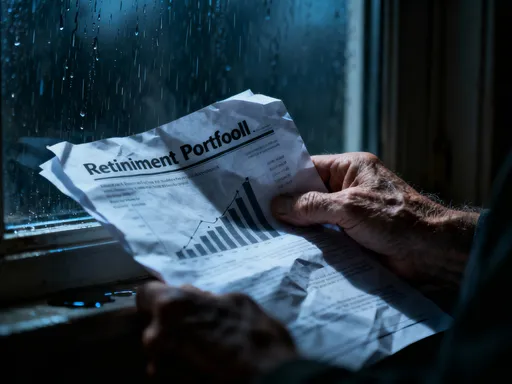
True financial resilience is not measured by how much you survive one storm, but by how well you live between them. The strategies discussed—capital preservation, liquidity planning, risk layering, income adaptability, and disciplined recovery—are not temporary fixes. They are lifelong habits that build quiet confidence. Together, they form what might be called a “peace of mind portfolio”: a financial structure designed not for maximum growth, but for maximum control and stability in uncertain times.
This portfolio is not flashy. It does not promise overnight wealth or market-beating returns. Instead, it focuses on low-volatility assets, high accessibility, and clear documentation. It values simplicity over complexity, reliability over novelty. It recognizes that in a world of unpredictable events, the greatest return is not in dollars earned, but in stress avoided and security maintained.
Peace of mind does not come from having the most money. It comes from knowing that no matter what happens, you have options. That you can access cash when banks are down. That your documents are safe. That you can earn something even if your job pauses. That you can rebuild without sacrificing your future. These are not luxuries—they are the foundation of financial dignity.
Building this kind of resilience takes time. It starts with small steps: opening a second account, storing a printed backup, learning a new skill. It grows through consistent choices—choosing stability over speculation, preparation over panic. And it pays off not in headlines, but in quiet moments: a mother buying groceries after a flood, a father repairing a roof without a loan, a family sleeping soundly because they know they are ready.
In the end, financial preparedness is not about fear. It is about freedom. Freedom from desperation. Freedom from debt. Freedom to respond with clarity, not chaos. When disaster strikes, the world may shake—but your finances don’t have to. With the right foundation, you don’t just survive. You stand firm.