How I Stopped Chasing Quick Wins and Started Thinking Like a Real Investor
Ever felt like the stock market’s just a rollercoaster of emotions? I’ve been there—buying high, selling low, jumping on hot tips, and wondering why my portfolio never grew. After years of trial and error, I realized something: successful investing isn’t about luck or timing. It’s about mindset, discipline, and strategy. This is the shift that changed everything for me—and what could transform your approach too. What began as a series of impulsive trades slowly evolved into a structured, thoughtful process grounded in patience and understanding. The journey wasn’t easy, but it was necessary. Along the way, I learned that real wealth isn’t built in days or months, but over years of consistent, rational decisions. This is not a story about overnight success. It’s about how ordinary investors can achieve lasting results by doing the unglamorous work that most overlook.
The Wake-Up Call: When My Portfolio Hit a Wall
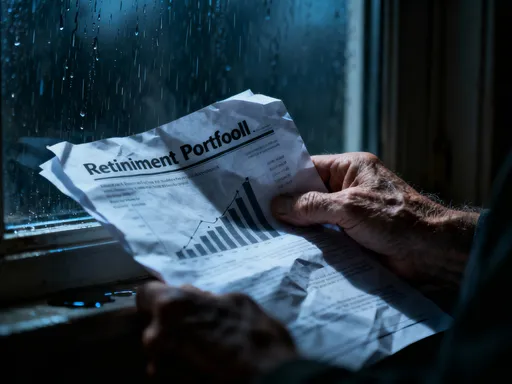
There was a moment, not long ago, when I looked at my brokerage statement and felt a sinking realization: despite being active in the market for nearly a decade, my returns were barely above zero. I had bought shares in fast-moving tech stocks, dabbled in cryptocurrency during its peak frenzy, and sold everything during the 2020 downturn—only to buy back in months later at even higher prices. I told myself I was being strategic, but in truth, I was reacting. My decisions were driven by fear, greed, and the constant hum of financial headlines. I wasn’t investing. I was gambling.
The turning point came during a sharp market correction in early 2022. A stock I had purchased based on a social media tip dropped 40% in two weeks. Instead of evaluating the fundamentals, I panicked and sold—locking in the loss. Weeks later, it rebounded, having been oversold due to temporary sentiment, not business failure. That experience forced me to confront an uncomfortable truth: I didn’t understand what I owned or why I owned it. I had no framework, no rules, and no plan. I was chasing quick wins while ignoring the slow, steady work that builds real wealth.
This pattern is more common than many admit. Investors often fall into the trap of reactive trading—buying after prices have already risen, selling when fear takes over, and constantly shifting strategies based on short-term noise. The cost of this behavior is hidden but real. Studies have shown that the average individual investor underperforms the market by a significant margin, not because of poor stock selection, but because of poor timing. According to data from DALBAR, over a 20-year period, the average equity fund investor earned annual returns of less than half of what the S&P 500 delivered. The gap isn’t due to lack of intelligence; it’s due to emotional decision-making.
Volatility is often mistaken for opportunity. A stock surging on earnings news or a trending meme stock capturing headlines can feel like a chance to get rich quickly. But without understanding the underlying business, such moves are no different from rolling dice. The danger isn’t just losing money—it’s losing years of compounding growth. Every time an investor exits the market, they reset the clock on their ability to benefit from long-term appreciation. The real cost of chasing quick wins isn’t measured in dollars lost, but in time wasted and discipline eroded.
From Noise to Clarity: Building a Strategy That Works
After my wake-up call, I stepped back and asked a simple question: What actually drives long-term investment returns? The answer, supported by decades of financial research, is clear: company performance, earnings growth, and valuation. Markets may swing on sentiment, but over time, prices reflect the economic reality of businesses. I began to shift my focus from price movements to business fundamentals. Instead of asking, “Will this stock go up tomorrow?” I started asking, “Is this company well-run, profitable, and positioned for long-term growth?”
This mindset shift led me to develop a basic but effective investment framework. First, I focused on identifying durable business models—companies with consistent revenue, strong cash flow, and a history of profitability. These aren’t always the flashiest stocks, but they tend to weather downturns better and compound value over time. Second, I learned to assess competitive advantages, often referred to as a company’s “moat.” Does the business have pricing power? Loyal customers? Proprietary technology? Brands like Coca-Cola, Johnson & Johnson, and Procter & Gamble have thrived for decades not because of hype, but because of their ability to maintain market leadership.
Understanding market cycles became another cornerstone of my strategy. Economic conditions ebb and flow. Periods of expansion are followed by recessions, and investor sentiment swings from optimism to pessimism. Rather than trying to predict these shifts, I learned to position my portfolio to endure them. For example, during economic expansions, cyclical sectors like industrials and consumer discretionary tend to outperform. In downturns, defensive sectors like utilities, healthcare, and consumer staples hold up better. By recognizing where we are in the cycle, I could adjust allocations without abandoning my long-term focus.
The most powerful change was moving from short-term speculation to long-term ownership. Instead of viewing stocks as digital tickets to trade, I began to see them as partial ownership in real businesses. This mental model transformed my behavior. I stopped checking prices daily and started reading annual reports. I ignored sensational headlines and focused on quarterly earnings trends. Over time, this approach led to better decisions. For instance, when a well-managed consumer goods company faced a temporary setback due to supply chain issues, I didn’t sell. Instead, I reviewed its balance sheet, confirmed its strong cash position, and held on. Within a year, the stock recovered and went on to deliver strong returns.
Filtering out noise became essential. Financial media thrives on urgency and drama. Every market move is framed as a crisis or a once-in-a-lifetime opportunity. But most of this commentary is irrelevant to long-term investors. I learned to distinguish between signals—data that reflects real business performance—and noise—opinions, rumors, and short-term price swings. By focusing on what matters, I gained clarity and confidence in my decisions.
Risk Isn’t the Enemy—Mismanagement Is
For years, I equated risk with losing money. But I’ve come to understand that the real danger lies in not knowing why you own an investment. True risk comes from lack of preparation, poor diversification, and emotional reactions. The goal isn’t to avoid risk altogether—impossible in any growth-oriented portfolio—but to manage it wisely. This realization reshaped how I structure my investments.
Position sizing became my first line of defense. I no longer put large chunks of capital into single stocks based on hunches. Instead, I set limits—no more than 5% of my portfolio in any one holding. This simple rule prevents any single loss from derailing my long-term plan. If a stock drops 30%, it only impacts my overall portfolio by 1.5%. That may still sting, but it won’t force me to abandon my strategy.
Diversification is another critical tool. I spread my investments across sectors, geographies, and asset classes. While U.S. stocks form the core of my portfolio, I also hold international equities, bonds, and real estate investment trusts (REITs). This mix reduces exposure to any one economic shock. For example, when U.S. tech stocks struggled in 2022, my international holdings and dividend-paying utilities helped stabilize returns. Diversification doesn’t guarantee profits or eliminate losses, but it smooths the ride and improves the odds of consistent performance.
Equally important are clear exit rules. I now define, in advance, under what conditions I will sell a stock. These rules are based on fundamentals, not price. If a company’s business model deteriorates, if debt levels rise unsustainably, or if management makes poor capital allocation decisions, I reassess. But I don’t sell just because the price drops. Market declines are normal. What matters is whether the underlying business remains sound. Having predefined criteria removes emotion from the decision and prevents panic selling.
Historical market drops offer valuable lessons. During the 2008 financial crisis, many investors sold near the bottom, locking in massive losses. Those who stayed invested—and even added to positions—were rewarded as markets recovered over the next decade. The S&P 500 lost more than half its value at the worst point, but from 2009 to 2019, it delivered average annual returns of over 15%. The difference between success and failure wasn’t stock selection; it was discipline. A well-structured portfolio, combined with a clear plan, allows investors to endure downturns without derailing their goals.
The Power of Patience: Why Time Beats Timing
One of the hardest lessons I learned is that trying to time the market is a losing game. Everyone wants to buy at the bottom and sell at the top, but even professionals fail at this consistently. The reality is that most of the market’s strongest gains occur in short, unpredictable bursts—often right after the worst drops. If you’re out of the market during those critical days, your returns suffer dramatically.
Consider this: from 2000 to 2020, the S&P 500 delivered average annual returns of about 7%. But if an investor missed just the 10 best trading days during that period, their return dropped to less than 3%. Miss the 20 best days, and they would have lost money overall. The problem? Those top-performing days often follow periods of extreme fear and volatility. They’re nearly impossible to predict. The only way to capture them is to stay invested.
This insight led me to embrace strategies that prioritize consistency over cleverness. Dollar-cost averaging—investing a fixed amount regularly, regardless of price—became a cornerstone of my approach. Instead of trying to pick the perfect entry point, I set up automatic contributions to my brokerage account every month. Over time, this smoothed out my purchase prices and removed the pressure to time the market. During downturns, I bought more shares at lower prices. During rallies, I bought fewer. The result was a lower average cost and steady progress.
Dividend reinvestment further amplified my returns. Companies that pay consistent dividends and grow them over time provide a dual engine of growth: price appreciation and income. By automatically reinvesting dividends, I bought more shares without lifting a finger. Over a decade, this compounding effect significantly boosted my total returns. A $10,000 investment in a stock with a 3% dividend yield, reinvested annually, can grow to over $25,000 in 20 years, assuming 5% annual price growth. That’s the quiet power of patience.
Training myself to stay invested wasn’t easy. There were times when fear crept in—during geopolitical tensions, inflation spikes, or banking crises. But I reminded myself of the long-term trend: markets rise over time because economies grow, innovation continues, and businesses adapt. Staying the course doesn’t require brilliance. It requires discipline. And discipline, like any skill, improves with practice.
Reading the Story Behind the Stock
Numbers are essential, but they don’t tell the whole story. Behind every stock symbol is a company with a management team, a culture, and a strategy. I began to look beyond the price-to-earnings ratio and ask deeper questions: Who runs this business? Are they focused on long-term value or short-term stock price manipulation? How do they treat shareholders? What is their vision for the next decade?
Management quality is a key differentiator. I started reading shareholder letters—especially those from CEOs like Warren Buffett and Jamie Dimon—not for investment tips, but to understand how thoughtful leaders communicate. They focus on business progress, capital allocation, and long-term goals, not quarterly earnings surprises. When a CEO prioritizes sustainable growth over stock buybacks or short-term metrics, it’s a positive signal.
I also learned to analyze earnings calls. Instead of skimming headlines, I listened to the full audio or read transcripts. I paid attention to how executives answered tough questions, whether they acknowledged challenges, and how they planned to navigate them. A company that admits mistakes and has a clear recovery plan is more trustworthy than one painting an overly optimistic picture.
Understanding industry trends became another priority. Is the company in a growing or declining sector? Is it adapting to technological change? For example, a retail business investing in e-commerce and supply chain efficiency is more likely to survive than one relying solely on brick-and-mortar stores. Similarly, energy companies shifting toward renewables may be better positioned for the long term than those doubling down on fossil fuels.
I also examined capital allocation—the way companies use their profits. Do they reinvest in the business? Pay dividends? Buy back shares? Make smart acquisitions? Poor capital allocation, like overpaying for acquisitions or hoarding cash, can destroy value. Strong allocation, like funding innovation or returning cash to shareholders, creates it. By studying these patterns, I gained insight into which companies were likely to thrive over time.
Tools That Actually Help—Not Hype You Up
In a world full of flashy trading apps and algorithmic signals, I’ve learned to rely on simple, proven tools. I maintain a watchlist of companies I’m interested in, but only those that meet clear criteria: profitability, low debt, consistent dividends, and strong management. I don’t chase momentum. I wait for price dips to buy, but only after confirming the fundamentals remain intact.
Price alerts help me stay disciplined. I set notifications for specific entry and exit points based on valuation, not emotion. If a stock I want reaches my target price, I review it calmly. If it’s still a good business at that price, I buy. If not, I move on. This removes impulse from the process.
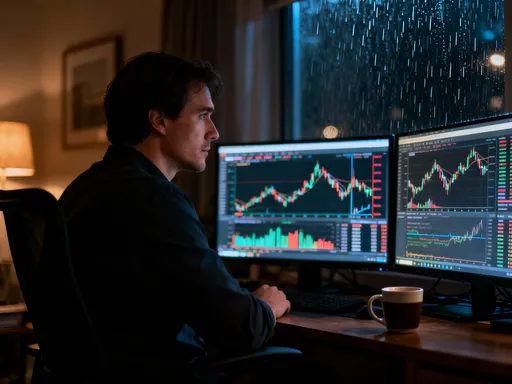
Basic chart analysis, used wisely, helps me understand market sentiment. I look at long-term trends, not intraday fluctuations. A stock in a multi-year uptrend with consistent higher lows suggests underlying strength. A sharp decline after years of growth may signal a buying opportunity—if the business is still sound. But I never let charts override fundamentals. They are a supplement, not a substitute.
I also pay attention to sector rotation and macroeconomic trends. When interest rates rise, I reduce exposure to high-growth, low-profit tech stocks and increase holdings in financials or dividend payers. When inflation cools, I may rotate back. This isn’t market timing—it’s prudent portfolio management. By staying aware of broader conditions, I make informed adjustments without overreacting.
These tools aren’t glamorous, but they work. Consistency matters more than complexity. The edge they provide isn’t in predicting the future, but in avoiding costly mistakes.
The Investor’s Mindset: Staying Calm When Markets Freak Out
The final piece of the puzzle was mental resilience. No strategy works if you can’t stick to it. I developed routines to keep myself grounded. I review my portfolio quarterly, not daily. I avoid financial news channels that amplify fear and hype. I set realistic expectations—knowing that 7-8% annual returns, compounded over time, can build significant wealth without taking excessive risks.
I also remind myself why I invest: not to get rich quickly, but to secure my family’s future, achieve financial independence, and reduce stress about money. When markets drop, I don’t see losses—I see opportunities. When bubbles inflate, I don’t feel envy—I feel caution. This mindset didn’t develop overnight. It came from experience, reflection, and a commitment to continuous learning.
FOMO—fear of missing out—is a constant challenge. Seeing others celebrate gains in speculative stocks can be tempting. But I’ve learned to focus on my own plan. I compare my progress to my goals, not to others’ portfolios. I celebrate small wins: another dividend reinvested, another year of consistent contributions, another market storm weathered without panic.
Because in the end, successful investing isn’t about being the smartest person in the room. It’s about being the most disciplined. It’s about showing up, staying the course, and trusting the process. The market rewards those who can ignore the noise, manage risk, and think in years, not days.
Investing isn’t about finding shortcuts—it’s about building a process that lasts. What changed everything for me wasn’t a single stock pick, but a complete shift in thinking. By focusing on what I can control—strategy, discipline, and risk—I stopped reacting and started growing. The market rewards patience, clarity, and consistency. If you’re ready to move beyond guesses and gambles, the real journey begins now.